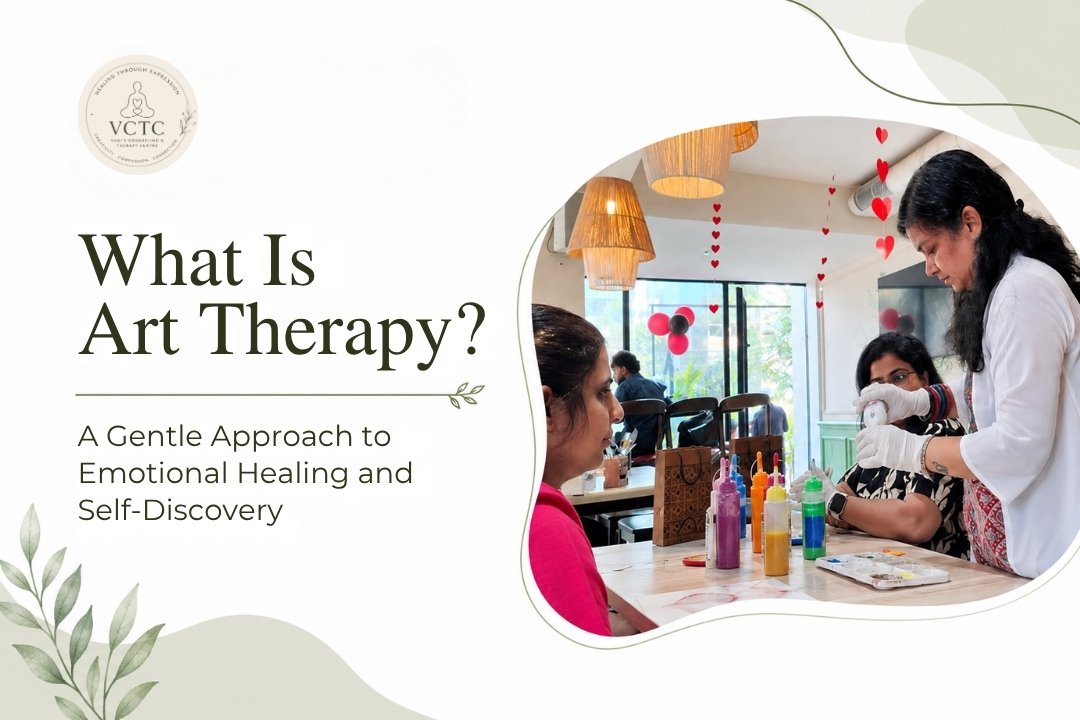
Art therapy is a creative and therapeutic approach that uses artistic expression to help people explore emotions, thoughts, experiences, and personal challenges. It is not about creating perfect artwork or having professional artistic skills. Instead, it provides a safe and meaningful way to express feelings that may sometimes be difficult to communicate through words alone.
What Is Art Therapy?
Art therapy combines psychological understanding with creative expression. It is facilitated by a trained professional who creates a supportive environment where individuals can explore their emotions and experiences through artistic activities.
The purpose is not to judge artistic ability or produce something aesthetically pleasing. The artwork becomes a form of expression and reflection.
“The therapeutic value lies in the process of expression and reflection rather than the quality of the final artwork.”
How Does Art Therapy Work?
Art therapy generally begins with a safe and comfortable therapeutic relationship. We first focus on understanding the individual's concerns, emotional experiences, personal history, and current needs.
Creative activities may then be introduced according to the person's comfort level. These activities can include drawing, painting, colour work, free expression, visual journaling, collage, clay work, creative writing, or other expressive exercises.
The process may encourage individuals to notice questions such as:
- What emotions are present right now?
- What thoughts keep returning?
- What does a particular colour or image represent personally?
- What feels difficult to express verbally?
- What changes when we look at an experience from another perspective?
- What would we like to understand about ourselves?
Art Therapy for Anxiety and Depression
Anxiety and depression can influence thoughts, behaviour, relationships, sleep, motivation, confidence, and everyday functioning. At times, individuals may know that they are struggling but may not know exactly how to explain what they are experiencing.
Creative expression can provide an additional way to explore these emotions.
Art Therapy for Stress Management
Modern life can create continuous mental and emotional pressure. Work responsibilities, family expectations, relationship concerns, academic pressure, financial worries, and personal uncertainty can contribute to prolonged stress.
Creative activities may complement counselling by giving individuals an opportunity to slow down, focus on the present moment, and express emotions in a non-judgmental environment.
Art Therapy and Trauma
Traumatic experiences can sometimes be difficult to describe directly. Individuals may experience fear, emotional numbness, distressing memories, avoidance, heightened alertness, or difficulty trusting others.
Expressive approaches may sometimes be incorporated carefully into trauma-informed counselling. The focus should remain on emotional safety rather than forcing someone to revisit painful experiences before they are ready.
Who Can Benefit From Art Therapy?
Art therapy can be useful for people experiencing a wide range of emotional and personal concerns. It may be considered by individuals dealing with:
- Anxiety and persistent worry
- Low mood and emotional heaviness
- Stress and burnout
- Relationship difficulties
- Low self-esteem
- Emotional confusion
- Grief and loss
- Life transitions
- Difficulty expressing feelings
- Self-discovery and personal growth
- Trauma-related emotional challenges
Art Therapy Is Not About Artistic Talent
One of the biggest misconceptions about art therapy is that people need to be creative or talented.
They do not. A simple line, colour, shape, symbol, handwritten word, or abstract drawing can become meaningful when it reflects an individual's internal experience.
A Safe Space to Understand Yourself More Deeply
We believe healing begins when we feel genuinely seen, heard, and accepted.
Our approach combines traditional counselling with creative expression, creating a space where individuals can slow down and explore their inner experiences without pressure to have all the answers immediately.
Understanding Yourself Can Be the Beginning of Change
Art therapy offers more than a creative activity. For many people, it can become a pathway towards self-awareness.
When we give ourselves permission to pause and express what we are experiencing, we may begin to notice emotions, beliefs, memories, and patterns that previously felt unclear.
Understanding yourself can be the beginning of meaningful change.
Healing does not always happen through one conversation or one technique. It is often a gradual process of awareness, acceptance, expression, and meaningful change.